

As artificial intelligence becomes more incorporated into our everyday lives, the need for more powerful and successful processing has skyrocketed. Operating complicated AI models involves immense computational power, which frequently results in high power consumption. That produces a significant concern: just how can we raise running features without frustrating our power grids and budgets? The solution is based on ai accelerator card.
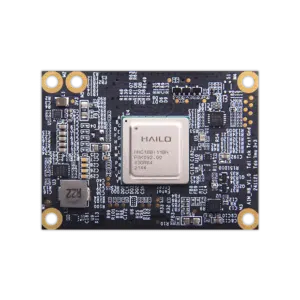
AI accelerators are specialized hardware made to increase AI and equipment understanding tasks. Unlike general-purpose CPUs, these accelerators are built particularly to handle the mathematical operations at the core of AI, such as matrix multiplications and convolutions. By optimizing for these particular jobs, they provide significant performance increases while using a portion of the power.
That shift towards specialized hardware is not really a tendency; it's an essential evolution. The global data middle electricity use is estimated to cultivate somewhat, with AI workloads being a major contributor. AI accelerators give you a sustainable course ahead, allowing businesses to range their AI initiatives responsibly. They ensure it is probable to method large levels of knowledge quickly, ultimately causing quicker insights and more impressive purposes, all while maintaining energy prices in check.
What are the benefits of AI accelerators?
AI accelerators offer a selection of benefits which are transforming the landscape of modern computing. By moving beyond standard handling models, companies may discover new degrees of performance and efficiency.
Decrease Energy Consumption
One of the most significant advantages may be the lowering of power usage. AI accelerators are engineered to execute specific calculations with optimum efficiency, eating less energy than general-purpose CPUs for exactly the same tasks. Like, running a large-scale AI product on a normal server might require several kilowatts of power, while an Hailo AI accelerator can perform the exact same effect using considerably less energy. This effectiveness translates directly into decrease energy expenses and an inferior carbon footprint, creating sophisticated AI more sustainable and cost-effective.
Increased Computational Rate
Rate is crucial on earth of AI. Whether it's instruction a complex neural network or processing real-time knowledge for an autonomous car, faster computation leads to better outcomes. AI accelerators are made to take care of the similar processing necessary for these workloads, executing an incredible number of calculations simultaneously. That results in teaching instances being decreased from months to times, as well as hours. The efficiency step enables developers to iterate on the designs quicker and release AI programs that could react in real time.
Improved Scalability
As AI designs grow in complexity, the electronics supporting them must manage to range accordingly. AI accelerators are designed with scalability in mind. Numerous accelerators can be linked together to handle also probably the most demanding computational jobs, letting companies to expand their AI capabilities without a proportional upsurge in physical room or energy consumption. That makes it possible for companies of most measurements to leverage effective AI, from startups building new programs to big enterprises analyzing massive datasets.
Driving the Potential of AI
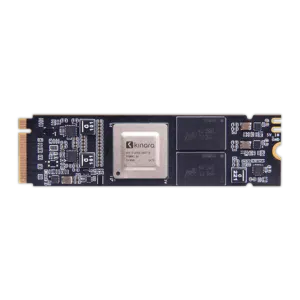
The move toward M.2 AI accelerator card scars a crucial turning place in the growth of artificial intelligence. By providing a method to considerably increase computational energy while concurrently reducing energy use, they solve one of many greatest challenges facing the industry. That engineering is not just about making recent AI programs faster and cheaper; it's about unlocking the potential for new innovations that were formerly out of achieve due to computational constraints. Once we continue steadily to drive the limits of what AI can do, accelerators would be the motor driving progress, ensuring a more efficient and sustainable scientific future.